
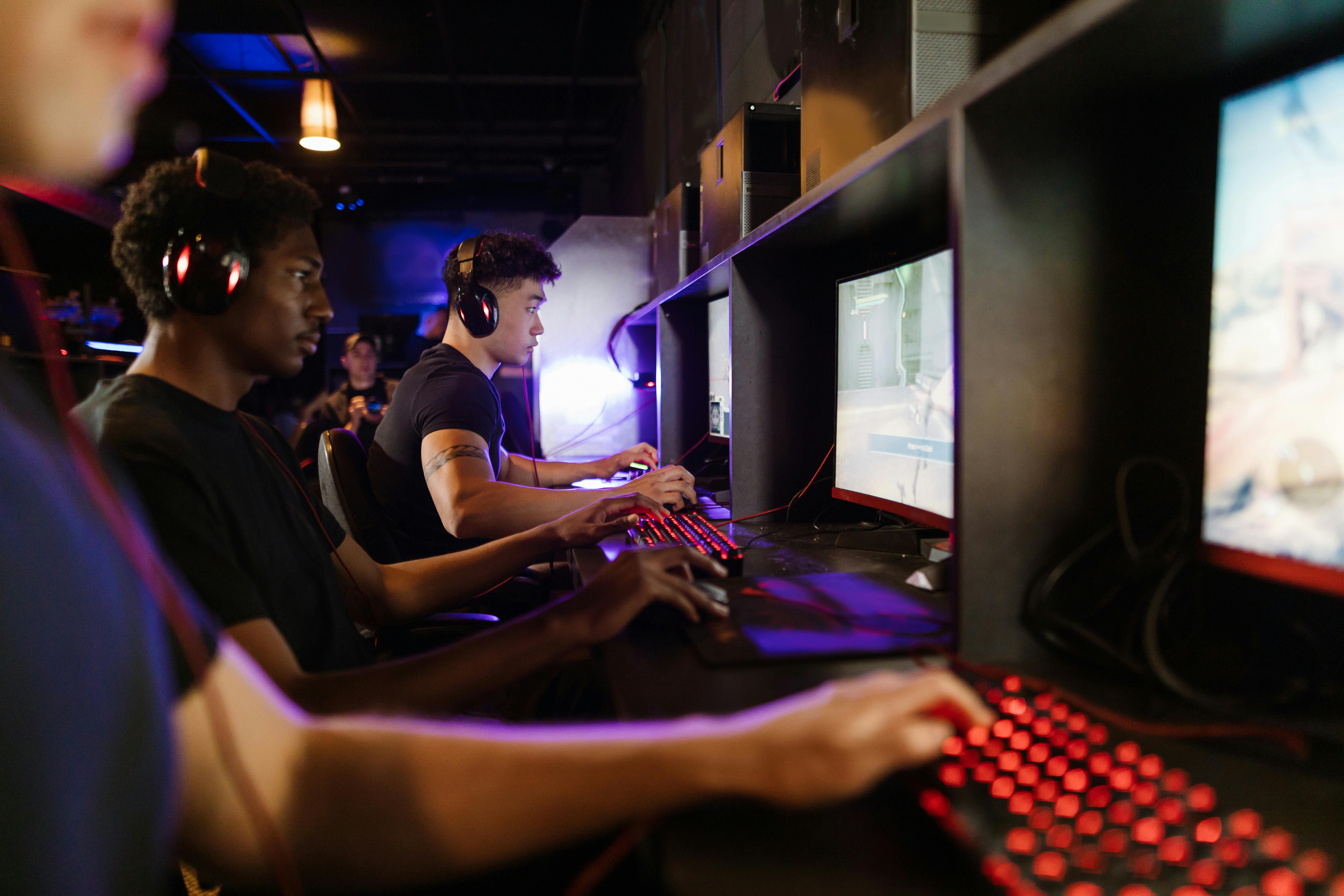
Dive into the future of PC gaming in 2026, where AI-powered GPUs and seamless cloud integration redefine performance, graphics, and immersive experiences. Discover the best next-gen hardware, compare leading cloud services, and find your ultimate upgrade path for unparalleled gaming prowess and maximum value.
Introduction to the Topic
Welcome to 2026, gamers! The landscape of PC gaming has undergone a seismic shift, propelled by the relentless march of Artificial Intelligence and the ever-expanding reach of cloud computing. Gone are the days when a simple GPU upgrade was the sole path to future-proofing your rig. Today, we stand at the precipice of a new era where AI isn't just an optimization tool but a fundamental pillar of game design, rendering, and player interaction. Simultaneously, cloud gaming has matured beyond its nascent struggles, offering a compelling alternative for those seeking high-fidelity experiences without the upfront hardware investment.
This year, the choice isn't merely about which graphics card to buy; it's about defining your entire gaming ecosystem. Do you embrace the raw, unbridled power of a local, AI-accelerated super-PC, or do you surrender to the convenience and accessibility of a premium cloud gaming subscription? Or perhaps, a cunning hybrid approach offers the best of both worlds? At gameserrari.com, we're dissecting these monumental shifts to help you navigate the thrilling, complex world of 2026 PC gaming, ensuring you make the smartest choices for your wallet and your gameplay.
Backgrounds & Facts
The journey to 2026 has been nothing short of revolutionary. AI, once confined to rudimentary NPC behaviors, now permeates every layer of the gaming stack. NVIDIA's 'Ada Lovelace Next' (RTX 6000 series) and AMD's 'RDNA 5' (Radeon RX 8000 series) GPUs are not just faster; they feature massively enhanced AI Tensor Cores and XDNA compute units, respectively, capable of real-time neural rendering, dynamic environment generation, and hyper-realistic physics simulations that were once pure science fiction. Intel's 'Lunar Lake' and subsequent architectures have also pushed integrated NPUs (Neural Processing Units) to the forefront, making AI acceleration ubiquitous.
These hardware advancements fuel technologies like DLSS 4.0 and FSR 4.0, which now leverage advanced AI models not just for upscaling, but for intelligent frame generation, dynamic lighting adjustments, and even real-time texture enhancement, making 8K gaming at high refresh rates a tangible reality for high-end systems. Beyond visuals, AI is transforming gameplay with adaptive difficulty, procedurally generated quests, and NPCs that learn and react with unprecedented realism.
Concurrently, cloud gaming has shed its early limitations. Fiber optic networks are now commonplace, and 5G/6G wireless technologies deliver ultra-low latency, making services like 'GeForce NOW Quantum' and 'Xbox Game Pass Zenith' indistinguishable from local play for many users. These platforms now boast dedicated, high-performance server blades featuring the very same cutting-edge GPUs and CPUs found in top-tier local PCs, often offering access to hardware configurations that would cost thousands to own outright. The promise of playing any game, anywhere, on almost any device, has finally been realized, challenging the very notion of PC ownership.
Expert Opinion / Analysis
"The convergence of AI hardware and robust cloud infrastructure is the defining characteristic of 2026 PC gaming," states Dr. Evelyn Reed, lead architect at Quantum Dynamics Labs. "We're seeing AI move beyond mere performance boosts. It's now enabling entirely new forms of interactive storytelling and dynamic world-building. Game engines are becoming intelligent agents themselves, constantly optimizing and evolving the player's experience in real-time."
Dr. Reed emphasizes the strategic dilemma for consumers: "For the hardcore enthusiast, a local AI-powered rig offers unparalleled control, zero-latency input, and the satisfaction of owning bleeding-edge technology. It's an investment in raw power and the freedom to tinker. However, cloud gaming's value proposition is incredibly strong. For a monthly fee, you get access to top-tier hardware that's constantly updated, without the hassle of maintenance, upgrades, or significant upfront cost. The environmental footprint of individual high-power PCs versus optimized data centers is also becoming a more prominent discussion point."
Our analysis at gameserrari.com suggests that while local hardware still reigns supreme for competitive esports players and content creators who demand absolute minimal latency and maximum local processing power, the gap is narrowing. For the vast majority of gamers, the decision now hinges on convenience, budget, and the desire for a 'set it and forget it' experience versus hands-on control and ultimate performance ceilings.
💰 Best Options in Comparison (VERY IMPORTANT)
Choosing your 2026 gaming path requires careful consideration. Here are the leading options:
-
The Apex Predator Rig: High-End Local AI Gaming PC
This is for the uncompromising enthusiast, the competitive player, and the content creator who demands the absolute best without compromise. Expect to build around the NVIDIA GeForce RTX 6090 (or AMD Radeon RX 8900 XTX) and an Intel Core i9-15900K (or AMD Ryzen 9 9950X3D). These systems boast dedicated AI accelerators (Tensor Cores/XDNA units) capable of running advanced neural rendering pipelines directly on your desktop. You'll experience sub-1ms latency, the highest possible frame rates at 4K/8K resolutions with full path tracing, and complete control over your hardware. You can customize every component, ensuring optimal cooling, power delivery, and aesthetics. This option provides the ultimate sense of ownership and the ability to run AI models for other tasks beyond gaming, such as video editing or 3D rendering.
-
Cloud Ascension Ultimate: Premium Cloud Gaming Subscription
Services like 'GeForce NOW Quantum' or 'Xbox Game Pass Zenith' offer a compelling alternative. For a monthly or annual subscription, you gain access to virtual machines powered by the latest RTX 6080-equivalent or RX 8800 XT-equivalent GPUs, often paired with high-core-count server CPUs. You can stream games at 4K resolution with ray tracing enabled to almost any device – smart TVs, tablets, even your phone – with latency now virtually imperceptible for most single-player and casual multiplayer titles. The biggest draw is zero hardware maintenance, no upgrade cycles, and a significantly lower upfront cost. You just pay and play. This option is perfect for gamers who prioritize convenience, portability, and access to a vast library of games without the financial burden and complexity of owning a high-end PC.
-
The Smart Hybrid Gamer: Local Mid-Range PC + Cloud Boost
For many, the optimal solution lies in a blended approach. Invest in a solid mid-range local gaming PC (e.g., an Intel Core i5-15600K with an RTX 6060 or RX 8700 XT). This provides excellent local performance for most modern titles, ensuring low latency for competitive games and the ability to run your favorite indies or older titles without relying on an internet connection. Then, complement this with a premium cloud gaming subscription. Use the cloud service for graphically demanding AAA blockbusters that push your local hardware to its limits, or for accessing games on the go when you're away from your main rig. This strategy offers incredible flexibility, balancing cost, performance, and accessibility, giving you the best of both worlds without breaking the bank on a single, all-encompassing solution.
Here's a detailed comparison to help you decide:
| Feature | Apex Predator Rig (High-End Local PC) | Cloud Ascension Ultimate (Premium Cloud Service) | Smart Hybrid Gamer (Mid-Range PC + Cloud) |
|---|---|---|---|
| Initial Cost | $$ (4000€+) | $ (0€ hardware, 20-30€/month) | $$ (1500-2500€ + 10-20€/month) |
| Monthly Cost | $ (Electricity, occasional game purchases) | $$ (Subscription fee, game purchases) | $ (Electricity, subscription fee, game purchases) |
| Performance Ceiling | Absolute maximum (8K+ at high FPS, full path tracing) | Very High (4K at high FPS, ray tracing) | High (1440p-4K local, Very High via cloud) |
| Latency | Near-zero (Hardware dependent) | Minimal (Network dependent, 10-30ms typical) | Near-zero (local), Minimal (cloud) |
| Upgrade Cycle | Every 2-4 years (expensive) | None (automatically updated by provider) | Every 3-5 years for local components (moderate) |
| Portability | Very Low (Desktop PC) | Very High (Play on any compatible device) | Low (local), Very High (cloud) |
| AI Features | Full local AI processing (DLSS 4.0, FSR 4.0, advanced game AI) | Cloud-accelerated AI processing (DLSS 4.0, FSR 4.0, game AI) | Local AI for local games, Cloud AI for streaming |
| Target User | Enthusiasts, competitive esports, content creators, VR/AR pioneers | Casual gamers, budget-conscious, multi-device users, convenience seekers | Balanced gamers, value seekers, diverse gaming habits |
Outlook & Trends
Looking ahead, the integration of AI will only deepen. We anticipate a future where games dynamically generate content, quests, and even entire narrative arcs based on player choices and AI analysis of their playstyle. Imagine NPCs with truly emergent personalities, evolving relationships, and memory of past interactions, all powered by local or cloud-based neural networks.
Cloud gaming will continue its expansion, potentially offering 'edge computing' solutions that bring server nodes even closer to the player, further minimizing latency. We might see a future where game ownership transforms entirely into subscription-based access, with cloud providers becoming the primary distributors of interactive entertainment. Furthermore, the burgeoning AR/VR space will heavily leverage AI for realistic environments and cloud streaming to offload computational strain, making truly immersive virtual worlds accessible to more users.
The environmental impact of these technologies will also be a growing concern. Hardware manufacturers are already investing in more sustainable production methods, and cloud data centers are increasingly relying on renewable energy sources. The next few years will undoubtedly bring innovations aimed at reducing the carbon footprint of our digital playgrounds.
Conclusion
2026 marks a pivotal moment in PC gaming history. The choice between raw local power and convenient cloud accessibility is no longer clear-cut, thanks to the revolutionary impact of AI and the maturation of streaming technologies. Whether you choose to invest in a monstrous, AI-accelerated local rig, embrace the effortless freedom of a premium cloud subscription, or cleverly combine both for the ultimate hybrid experience, the future of gaming is brighter, more intelligent, and more accessible than ever before. The best path forward is the one that aligns with your gaming priorities, budget, and lifestyle. Explore these options, consider the comparisons, and make an informed decision that will redefine your gaming journey for years to come. The revolution is here – which side will you choose?