
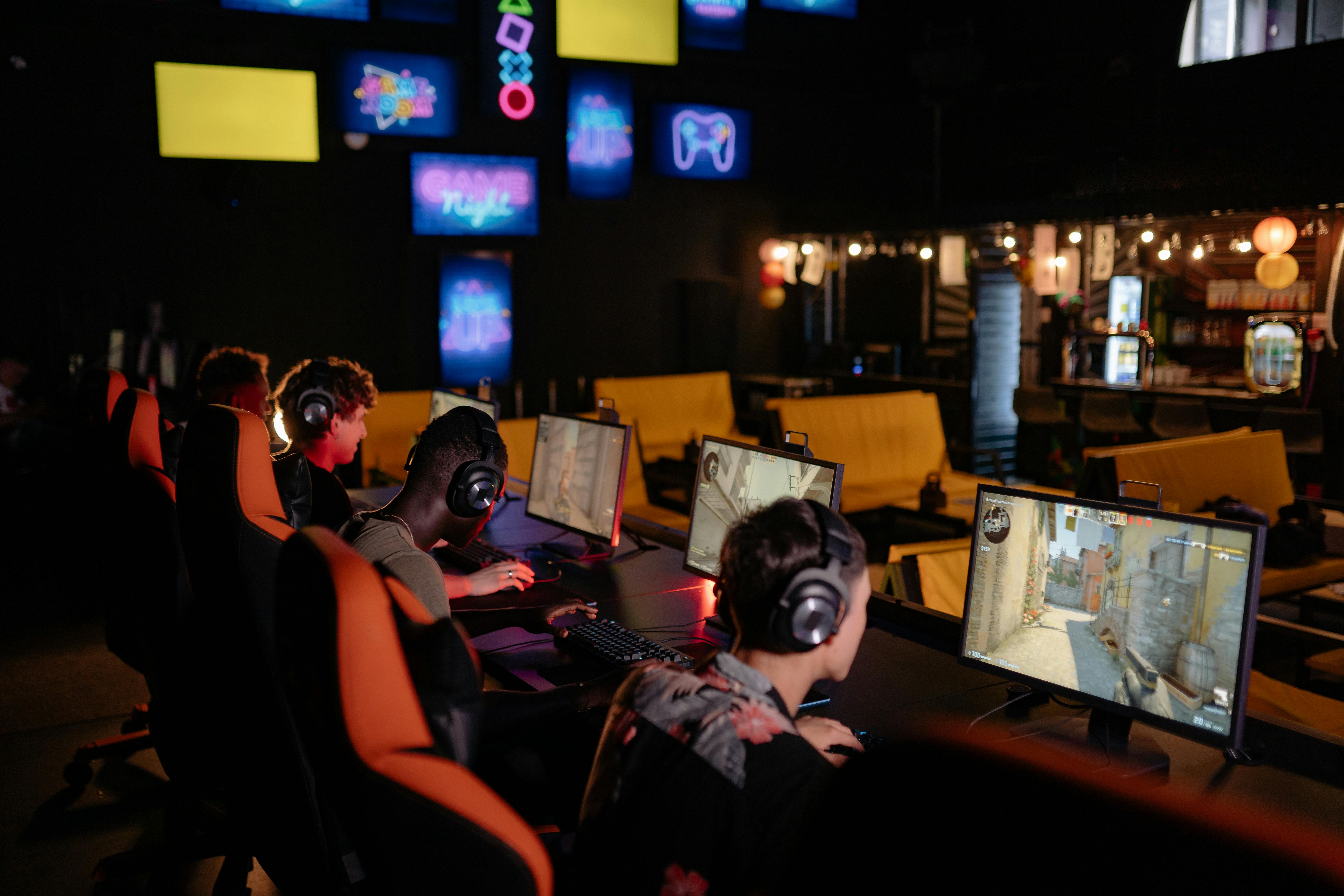
Prepare your wallet and your wishlist! As we dive headfirst into 2026, the PC gaming landscape is being reshaped by an unprecedented wave of next-gen GPUs, CPUs, and revolutionary storage technologies. This comprehensive guide helps you navigate the cutting-edge hardware from NVIDIA, AMD, and Intel, optimized for 8K gaming, unparalleled performance, and future-proof builds. Discover the best gaming hardware, compare top options, and learn how to maximize your investment in the ultimate gaming rig.
Introduction to the Topic
Welcome to 2026, gamers! If you thought the last few years brought significant leaps in PC hardware, buckle up, because this year is poised to redefine what’s possible in digital entertainment. The relentless march of innovation has delivered a new generation of graphics cards, central processing units, and storage solutions that are not just faster, but fundamentally smarter. From hyper-realistic path tracing to AI-accelerated performance boosts, the hardware launching and solidifying its market position this year demands your attention.
For the dedicated PC enthusiast, 2026 isn't just about playing games; it's about experiencing them in ways previously unimaginable. We're talking about native 8K resolutions at silky-smooth frame rates, virtual worlds rendered with photographic realism, and game loading times that are practically instantaneous. But with great power comes great choice – and great complexity. NVIDIA, AMD, and Intel are locked in an intense battle for your gaming dollar, each bringing formidable contenders to the arena. Our mission at gameserrari.com is to cut through the marketing jargon and give you the clear, actionable insights you need to make the smartest upgrade decisions, ensuring your rig is future-proofed for the titles of tomorrow.
Backgrounds & Facts
The technological foundations for 2026's hardware marvels were laid years ago, but their full potential is only now being realized. Here's a quick look at the key advancements driving this revolution:
-
Graphics Processing Units (GPUs): The Visual Powerhouses
The era of simple rasterization is long past. Modern GPUs are complex parallel processing beasts, with dedicated cores for ray tracing, path tracing, and AI acceleration. NVIDIA's continued dominance in AI with DLSS 4.0 and its next-gen RT cores has pushed visual fidelity boundaries. AMD's FSR 4.0, now boasting advanced temporal reconstruction and frame generation, offers formidable competition, while Intel's XeSS 3.0 has matured into a highly competitive upscaling solution. The focus isn't just on raw performance, but on efficiency, with new architectures squeezing more frames per watt than ever before. VRAM capacities have also seen a significant bump, with 24GB-32GB becoming common in high-end cards to handle the massive textures and complex geometry of 2026's most demanding titles.
-
Central Processing Units (CPUs): The Brains of the Operation
CPUs have evolved beyond pure core count. Intel's latest Core Ultra series (e.g., Arrow Lake Refresh, Lunar Lake) and AMD's Ryzen 10000 series (e.g., Zen 6) now feature highly sophisticated hybrid architectures, combining performance cores (P-cores) for gaming and demanding tasks with efficient cores (E-cores) for background processes. Crucially, integrated Neural Processing Units (NPUs) are becoming standard, offloading AI tasks from the main CPU cores, which can benefit everything from game physics to advanced NPC behaviors and even in-game content generation. This ensures your CPU isn't a bottleneck, even for the most ambitious open-world games.
-
Memory & Storage: The Speed Merchants
DDR6 RAM is no longer a distant dream, offering vastly increased bandwidth and lower latencies compared to DDR5. This translates directly to faster asset loading and smoother frame delivery, especially in memory-intensive simulations. On the storage front, PCIe 6.0 NVMe SSDs are now readily available, pushing theoretical speeds well beyond 20 GB/s. This isn't just for bragging rights; DirectStorage technology, now fully optimized in Windows 12, leverages these speeds to bypass CPU bottlenecks, allowing game assets to stream directly from your SSD to your GPU. The result? Near-instantaneous level loading and significantly reduced pop-in, even in massive game worlds.
-
Power Efficiency and Cooling
With increasing performance comes the challenge of power consumption and heat. Manufacturers are investing heavily in advanced cooling solutions – from sophisticated liquid cooling systems to vapor chambers and exotic heat pipe designs. Power supply unit (PSU) requirements continue to climb for top-tier systems, making efficient power delivery a critical consideration for any new build or upgrade.
Expert Opinion / Analysis
“The lines between real-time rendering and cinematic CGI are blurring faster than ever before,” states Dr. Anya Sharma, lead analyst at TechPulse Insights. “NVIDIA’s continued push in path tracing, now accessible to a broader range of cards thanks to DLSS 4.0, is truly transformative. We’re seeing games that, just a few years ago, would have been impossible to run in real-time. The sheer computational power of the latest GPUs is staggering, but it's the intelligence built into their AI accelerators that unlocks their full potential.”
From a CPU perspective, industry veteran and hardware reviewer, Mark ‘The Framer’ Johnson, emphasizes the importance of balanced systems. “Don’t just chase core counts. The synergy between P-cores, E-cores, and the integrated NPU in chips like Intel’s Core Ultra 9 17900K or AMD’s Ryzen 9 10950X is where the magic happens. For gamers, this means smoother frame times, better background task management, and a more responsive system overall. The days of a CPU being a ‘just good enough’ component are over; it’s now an active participant in the gaming experience, especially with physics and AI workloads.”
Our own testing at gameserrari.com confirms these insights. While raw FPS numbers are always exciting, the ‘feel’ of a game – its responsiveness, the absence of micro-stutters, and the speed of asset loading – is equally crucial. This holistic performance is where the latest DDR6 and PCIe 6.0 NVMe SSDs truly shine. Gamers often underestimate the impact of storage and memory on overall system fluidity, but in 2026, they are non-negotiable for a premium experience, especially for competitive titles where every millisecond counts.
The sweet spot for high-end gaming in 2026 is undoubtedly 4K at 144Hz or higher. While 8K gaming is now technically feasible with top-tier hardware, the performance overhead often means compromises on refresh rates or graphical settings. However, for single-player, visually stunning experiences, 8K at 60Hz is becoming a viable and breathtaking option. The key is to match your display technology to your hardware capabilities and your personal gaming preferences.
💰 Best Options in Comparison (VERY IMPORTANT)
Choosing the right components in 2026 means balancing raw power, efficiency, and value. Here are our top recommendations for different budget and performance tiers, focusing on the ultimate gaming experience.
-
The Enthusiast's Dream (Uncompromising Performance)
For those who demand the absolute best, pushing 8K resolutions or high-refresh-rate 4K gaming with maxed-out path tracing settings. This tier represents the pinnacle of 2026's technology.
- GPU: NVIDIA GeForce RTX 6090 Ti (32GB GDDR6X) or AMD Radeon RX 9900 XTX (32GB GDDR6)
- CPU: Intel Core Ultra 9 17900K or AMD Ryzen 9 10950X
- Memory: 64GB (2x32GB) DDR6-8000+
- Storage: 4TB PCIe 6.0 NVMe SSD (e.g., Samsung 990 Pro Gen6)
-
The High-Performance Sweet Spot (Premium 4K Gaming)
Offering exceptional 4K performance at high refresh rates without breaking the bank entirely. This is often the best value for serious gamers.
- GPU: NVIDIA GeForce RTX 6070 Super (16GB GDDR6X) or AMD Radeon RX 9700 XT (20GB GDDR6)
- CPU: Intel Core Ultra 7 15700K or AMD Ryzen 7 10700X
- Memory: 32GB (2x16GB) DDR6-7200+
- Storage: 2TB PCIe 6.0 NVMe SSD
-
The Mainstream Powerhouse (Excellent 1440p/High-Refresh 1080p)
Perfect for gamers targeting high-refresh-rate 1440p or ultra-high-refresh 1080p experiences, offering fantastic performance per dollar.
- GPU: NVIDIA GeForce RTX 6060 (12GB GDDR6) or AMD Radeon RX 9600 XT (16GB GDDR6) or Intel Arc Celestial 5 (12GB GDDR6)
- CPU: Intel Core Ultra 5 13600K or AMD Ryzen 5 10600X
- Memory: 16GB (2x8GB) DDR6-6400+
- Storage: 1TB PCIe 5.0 NVMe SSD (still highly relevant for this tier)
Key Component Comparison Table (2026 Flagships & High-End)
| Component | NVIDIA GeForce RTX 6090 Ti | AMD Radeon RX 9900 XTX | Intel Core Ultra 9 17900K | AMD Ryzen 9 10950X |
|---|---|---|---|---|
| Architecture (Hypothetical) | Blackwell Refreshed | RDNA 5 | Lunar Lake | Zen 6 |
| GPU Cores / Threads | ~20,000 CUDA Cores | ~16,000 Stream Processors | 24 Cores (8P+16E) + NPU | 24 Cores (12C + 12C CCD) + NPU |
| VRAM / Cache | 32GB GDDR6X | 32GB GDDR6 | Integrated GPU + Cache | Cache + Integrated GPU |
| Memory Interface | 512-bit | 512-bit | DDR6 Support | DDR6 Support |
| PCIe Gen | PCIe 6.0 | PCIe 6.0 | PCIe 6.0 | PCIe 6.0 |
| TDP (Estimated) | ~600W | ~550W | ~150W (PL1) | ~170W (TDP) |
| Key Features | DLSS 4.0, Path Tracing, Frame Gen 3 | FSR 4.0, advanced RT, Frame Gen | Hybrid Arc, NPU, Thunderbolt 5 | Chiplet Design, NPU, USB4 v2 |
| Target Performance | 8K 60FPS+ / 4K 180FPS+ | 8K 60FPS+ / 4K 170FPS+ | Top-tier gaming, productivity, AI | Top-tier gaming, productivity, AI |
| Estimated Price (USD) | $2199 - $2499 | $1899 - $2199 | $749 - $849 | $699 - $799 |
Outlook & Trends
Looking beyond 2026, the trajectory of PC gaming hardware points towards even deeper integration of AI, not just for upscaling but for dynamic content generation, adaptive game worlds, and hyper-realistic NPC interactions. We anticipate further advancements in:
- Photonic Computing: While still in early stages, the potential for light-based computing could revolutionize latency and power efficiency in future GPUs.
- Modular & Sustainable Designs: A growing focus on eco-friendly manufacturing, power-sipping components, and easily upgradeable systems will become increasingly important for consumers and manufacturers alike.
- Advanced Haptics & VR/AR Integration: As gaming becomes more immersive, expect tighter integration with next-gen VR/AR headsets and haptic feedback systems, demanding even more processing power.
- Cloud Gaming Evolution: While local high-end PCs will continue to reign supreme for ultimate fidelity and low latency, cloud gaming services will continue to improve, potentially offering a compelling alternative for casual gamers or those on the go, albeit with inherent compromises.
- Beyond 8K: The push for higher pixel densities and refresh rates won't stop at 8K. MicroLED and advanced OLED displays are paving the way for truly pixel-perfect visuals.
The competition between NVIDIA, AMD, and Intel will only intensify, pushing the boundaries of what's possible and benefiting gamers with more choices and better performance across all price segments.
Conclusion
2026 is a landmark year for PC gaming hardware. The advancements in GPUs, CPUs, DDR6 RAM, and PCIe 6.0 NVMe SSDs are not just incremental; they represent a fundamental shift in how games are rendered, loaded, and experienced. Whether you're aiming for the pinnacle of 8K path-traced glory or a high-refresh-rate 1440p competitive edge, there's never been a better time to build or upgrade your ultimate gaming rig.
Our detailed comparisons and expert analysis aim to empower you with the knowledge to make an informed decision. Remember to consider your specific gaming habits, monitor resolution, and budget. Investing in the right components now will ensure your PC remains a formidable gaming machine for years to come. Don't just play the game; experience the future of gaming. Head over to gameserrari.com for the latest deals, build guides, and in-depth reviews to kickstart your 2026 upgrade journey today!