
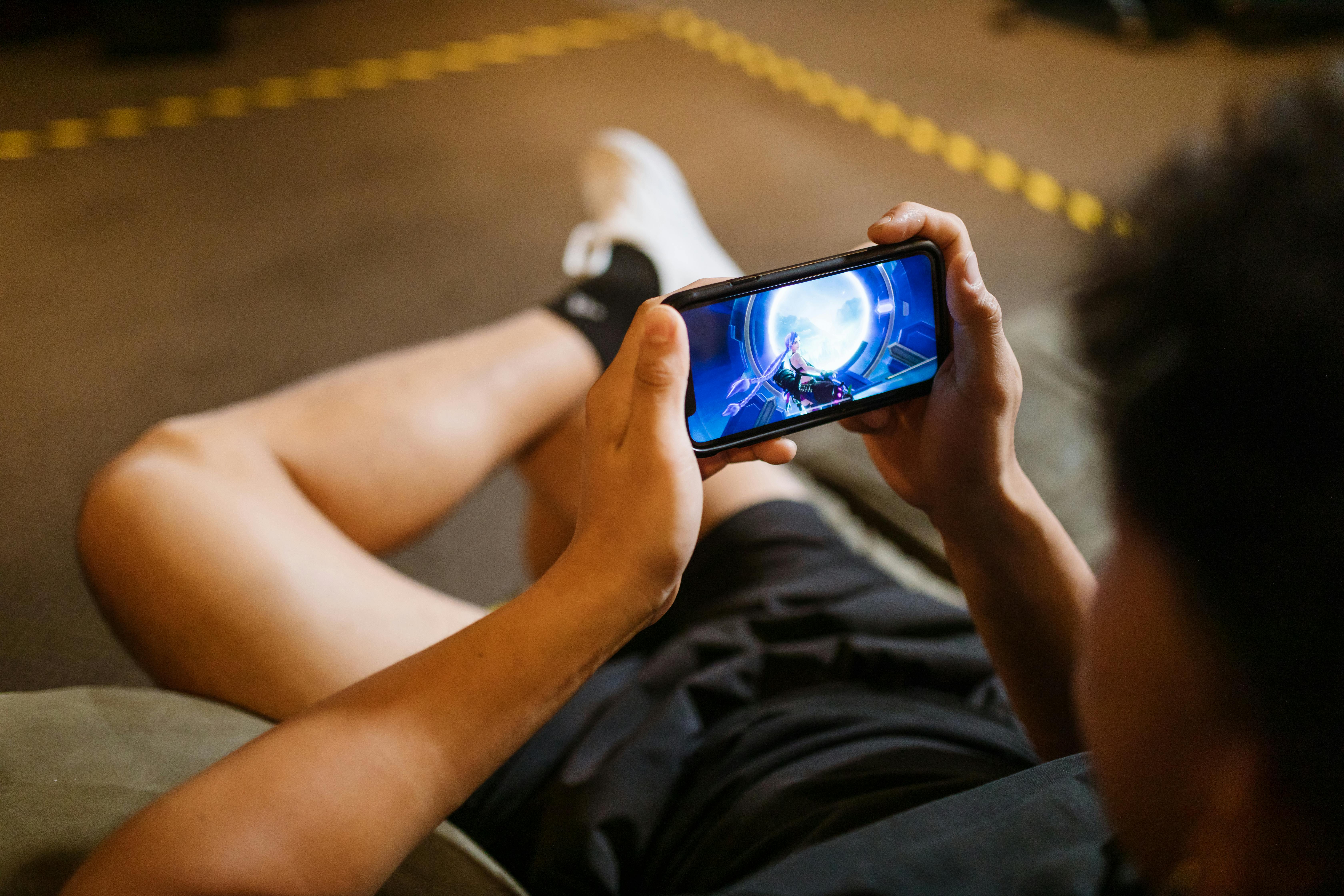
Tired of expensive consoles and gaming PCs? By 2026, mobile cloud gaming has truly arrived, offering a seamless, high-fidelity experience directly on your smartphone. Discover the best cloud gaming services, essential mobile gaming phones, and must-have gaming accessories to unlock next-gen performance without breaking the bank. Compare top platforms like Xbox Cloud Gaming, GeForce NOW, and PlayStation Plus Premium to find your perfect subscription and elevate your gameplay on the go!
Introduction to the Topic
Welcome to 2026, where the future of gaming isn't just arriving – it's already in your pocket. The promise of playing AAA titles on any device, anywhere, once a distant dream, has now become a tangible reality thanks to the explosive growth and technological advancements in mobile cloud gaming. Gone are the days when high-end graphics and immersive worlds were exclusively tethered to bulky consoles or powerful gaming rigs. Today, your smartphone, armed with a stable internet connection, is your portal to an endless universe of premium entertainment.
For gamers seeking maximum value, unparalleled flexibility, and a truly future-proof setup, understanding the nuances of mobile cloud gaming is no longer optional – it's essential. This isn't just about convenience; it's about democratizing access to the industry's biggest blockbusters, reducing upfront hardware costs, and transforming how we interact with our favorite digital worlds. Whether you're a casual player looking to fill commutes with epic adventures or a hardcore enthusiast demanding competitive performance, the 2026 landscape of mobile cloud gaming offers a solution tailored just for you. Get ready to ditch the upgrade cycle and embrace a new era of gaming freedom, all while optimizing your budget and maximizing your fun.
Backgrounds & Facts
The journey of cloud gaming has been a long and challenging one, but by 2026, it has undeniably reached a pivotal maturity. Early attempts faced significant hurdles: inconsistent internet speeds, high latency, and a lack of robust infrastructure. However, the last few years have seen a confluence of technological breakthroughs that have propelled mobile cloud gaming from a niche concept to a mainstream phenomenon. The widespread deployment of 5G networks, offering unprecedented speeds and ultra-low latency, has been a primary catalyst. This, coupled with advancements in video compression algorithms (like AV1 and next-gen proprietary codecs) and the proliferation of powerful mobile chipsets, has virtually eliminated many of the performance bottlenecks that plagued earlier services.
Market analysts project that the global cloud gaming market will exceed $10 billion by the end of 2026, with mobile platforms accounting for a significant portion of this growth. Major players like Microsoft, NVIDIA, Sony, and Amazon have invested billions into refining their cloud infrastructure, building dedicated data centers closer to users, and expanding their game libraries. Furthermore, the rise of subscription-based models has made access to vast catalogs of games more affordable than ever, driving mass adoption. Gamers are no longer just buying games; they're subscribing to entire ecosystems. This shift is particularly pronounced on mobile, where the average user is accustomed to subscription services and values the convenience of instant access. The integration of haptic feedback, adaptive triggers via advanced mobile controllers, and high-refresh-rate OLED displays on modern smartphones further blurs the line between dedicated gaming hardware and everyday devices, offering a truly premium experience.
Expert Opinion / Analysis
“The trajectory of mobile cloud gaming is astounding,” states Dr. Anya Sharma, a leading analyst in interactive entertainment technology. “By 2026, we’ve moved beyond the ‘proof of concept’ phase. The primary challenge of latency, once a deal-breaker for competitive gamers, has been largely mitigated by 5G and edge computing. Data centers are now strategically located, often within 100 miles of major population centers, ensuring sub-20ms ping times for most users. This is critical for twitch-based shooters and fighting games, which were previously unplayable in the cloud.”
She continues, “The real game-changer is accessibility. Cloud gaming removes the financial barrier of entry for high-fidelity gaming. A new gamer no longer needs to spend hundreds or thousands on a console or PC; a decent 5G-enabled mobile phone and an affordable subscription are all that's required. This significantly expands the market, bringing millions of new players into the AAA gaming ecosystem. However, not all services are created equal. Consumers must consider their internet stability, the specific game libraries offered, and the pricing structure. Some services excel in sheer catalog size, others in performance or exclusive titles. It’s about matching the service to the individual’s gaming habits and budget.”
Another industry veteran, Mark “Streamer” Chen, a professional mobile eSports commentator, adds, “From an eSports perspective, the biggest hurdle was input lag. But with dedicated cloud gaming accelerators and optimized network protocols, top-tier mobile players are now competing on cloud platforms with negligible disadvantage. We're even seeing tournaments being played entirely over cloud streaming, which is a testament to how far the technology has come. The focus now is on integrating more mobile-native UI elements, ensuring controllers are universally supported, and pushing for even higher fidelity streams – think 4K on a tablet, or even early VR/AR cloud integration.”
💰 Best Options in Comparison (VERY IMPORTANT)
Choosing the right mobile cloud gaming service in 2026 can feel overwhelming with the array of powerful options available. We've meticulously analyzed the top contenders, focusing on value, performance, game selection, and unique features to help you make the best purchasing decision.
-
Xbox Cloud Gaming (part of Game Pass Ultimate)
Microsoft's flagship service remains a powerhouse. By 2026, it boasts an even larger library of first-party Xbox exclusives available day-one, alongside hundreds of third-party titles. Performance has been significantly enhanced, leveraging Xbox Series X hardware in the cloud. It's incredibly user-friendly, integrating seamlessly with your existing Xbox ecosystem. Ideal for gamers who want a vast, ever-evolving library and prefer the Xbox experience. Works best with an Xbox-compatible controller.
- Pros: Massive, constantly updated game library including all Xbox Game Studios titles; excellent integration with Xbox ecosystem; robust performance; competitive pricing for the overall Game Pass Ultimate package.
- Cons: Requires Game Pass Ultimate subscription; limited to games available on Xbox; streaming resolution typically capped at 1080p.
- Recommended for: Xbox fans, budget-conscious gamers wanting a huge library, casual and core players.
-
NVIDIA GeForce NOW Ultimate
GeForce NOW continues to be the undisputed champion for PC gamers looking to stream their existing Steam, Epic Games Store, and other PC libraries. The 'Ultimate' tier by 2026 offers access to cutting-edge RTX 4080-equivalent performance, enabling stunning 4K streaming (on compatible devices) with ray tracing and DLSS 3.5. If you already own a vast PC game collection and demand the absolute highest graphical fidelity on mobile, this is your go-to. It effectively turns your phone into a portable, high-end gaming PC.
- Pros: Stream your existing PC game library; unparalleled graphical fidelity (RTX 4080-equivalent performance); supports 4K streaming and ray tracing; excellent low-latency performance.
- Cons: Requires you to own the games on PC platforms; higher subscription cost for Ultimate tier; not all PC games are supported.
- Recommended for: PC gamers who own many titles, users prioritizing graphical performance and ray tracing, competitive players.
-
PlayStation Plus Premium (Cloud Streaming)
Sony's answer to cloud gaming has matured considerably by 2026, offering a substantial catalog of PS5, PS4, and classic PlayStation titles playable via streaming. While its library may not be as expansive as Xbox Cloud Gaming for new releases, it's invaluable for PlayStation aficionados wanting access to exclusives on the go. Performance has seen significant improvements, and it's particularly appealing for those already invested in the PlayStation ecosystem. A DualSense controller is highly recommended for the best experience.
- Pros: Access to PlayStation exclusive titles; includes a large library of PS4/PS5 and classic games; integrates with PlayStation ecosystem; improving performance.
- Cons: Game library for streaming is smaller than Xbox's; resolution typically 1080p; requires PlayStation Plus Premium subscription.
- Recommended for: PlayStation fans, players seeking exclusive PlayStation titles, those with a PSN account.
-
Amazon Luna+
Amazon Luna has carved out a niche with its channel-based subscription model, offering a diverse range of games through various 'channels' (e.g., Luna+, Ubisoft+, Retro Channel). By 2026, Luna has expanded its library and improved its streaming technology, leveraging Amazon's vast AWS infrastructure. It's particularly appealing for Prime members who get a selection of games included. Its unique 'Luna Controller' offers direct cloud connection for reduced latency. Good for those who want flexible channel subscriptions or are already deep in the Amazon ecosystem.
- Pros: Flexible channel-based subscriptions; some games included with Amazon Prime; dedicated low-latency Luna Controller; leveraging robust AWS infrastructure.
- Cons: Game selection can vary greatly by channel; performance can be inconsistent depending on region; less focus on AAA new releases compared to others.
- Recommended for: Amazon Prime members, users who prefer specific game genres via channels, families.
To help you compare, here's a detailed breakdown:
| Service | Key Feature | Best For | Subscription Cost (Monthly Est. 2026) | Max Resolution (Mobile) | Game Library | Recommended Controller |
|---|---|---|---|---|---|---|
| Xbox Cloud Gaming | Vast Xbox Game Pass library, day-one exclusives | Xbox fans, budget gamers, variety seekers | $16.99 (Game Pass Ultimate) | 1080p @ 60fps | 400+ titles (Xbox & PC) | Xbox Wireless Controller |
| NVIDIA GeForce NOW Ultimate | Stream your PC library, RTX 4080-equivalent power | PC gamers, graphics enthusiasts, competitive players | $19.99 (Ultimate Tier) | 4K @ 120fps (on compatible devices), 1080p on most phones | Thousands of PC titles you own | Any Bluetooth gamepad, Razer Kishi V2 |
| PlayStation Plus Premium | PlayStation exclusives, classic titles | PlayStation loyalists, exclusive hunters | $17.99 (Premium Tier) | 1080p @ 60fps | 700+ (PS5, PS4, Classics) | DualSense Wireless Controller |
| Amazon Luna+ | Flexible channels, Prime benefits, low-latency controller | Amazon Prime members, casual gamers, families | $9.99 (Luna+ Channel, others vary) | 1080p @ 60fps | Varies by channel (hundreds) | Amazon Luna Controller |
Beyond subscriptions, consider your mobile hardware. While any modern 5G smartphone will work, devices like the ROG Phone 9, RedMagic 8S Pro, or the latest Samsung Galaxy S26 Ultra offer superior cooling, higher refresh rate displays, and dedicated gaming modes for an optimal experience. Don't forget essential mobile gaming accessories: a comfortable Bluetooth gaming controller (e.g., Backbone One, Razer Kishi V2, or an official Xbox/PlayStation controller clip), and perhaps a high-quality pair of low-latency wireless earbuds for immersive audio. These investments significantly enhance your cloud gaming journey.
Outlook & Trends
The future of mobile cloud gaming beyond 2026 promises even more revolutionary changes. We anticipate deeper integration with mobile operating systems, potentially allowing games to launch directly from app stores without needing a dedicated client, making the experience even more seamless. The advent of AI-powered upscaling and frame generation techniques will push visual fidelity beyond native resolutions, making 1080p streams look indistinguishable from 4K. Furthermore, expect to see cloud gaming play a pivotal role in the burgeoning mobile VR and AR space, allowing complex virtual worlds to be rendered remotely and streamed to lightweight headsets.
New business models are also on the horizon. Beyond subscriptions, we might see 'pay-per-play' models for specific titles, or even 'ad-supported' tiers for casual games. The competition among providers will drive down prices and increase feature sets, benefiting consumers. Moreover, the convergence of social media and gaming will likely intensify, with integrated streaming and sharing features becoming standard. The ultimate goal remains ubiquitous access to high-quality entertainment, independent of device limitations, and mobile cloud gaming is firmly on track to deliver that vision.
Conclusion
By 2026, mobile cloud gaming has truly come into its own, offering an unparalleled blend of accessibility, performance, and value. It's no longer just a compromise; it's a legitimate, often superior, way to experience the latest and greatest games. Whether you're eyeing the vast library of Xbox Cloud Gaming, the raw graphical power of GeForce NOW Ultimate, the exclusive worlds of PlayStation Plus Premium, or the flexible channels of Amazon Luna+, there's a perfect solution waiting for you.
Don't let outdated hardware or high upfront costs limit your gaming potential. Invest in a stable 5G data plan, choose the best mobile cloud gaming service that aligns with your preferences, and equip yourself with a quality mobile gaming controller and a capable gaming phone. The revolution is here, and it's more affordable and exciting than ever. Dive into the future of gaming today and unlock an endless universe of adventure, right from the palm of your hand!