
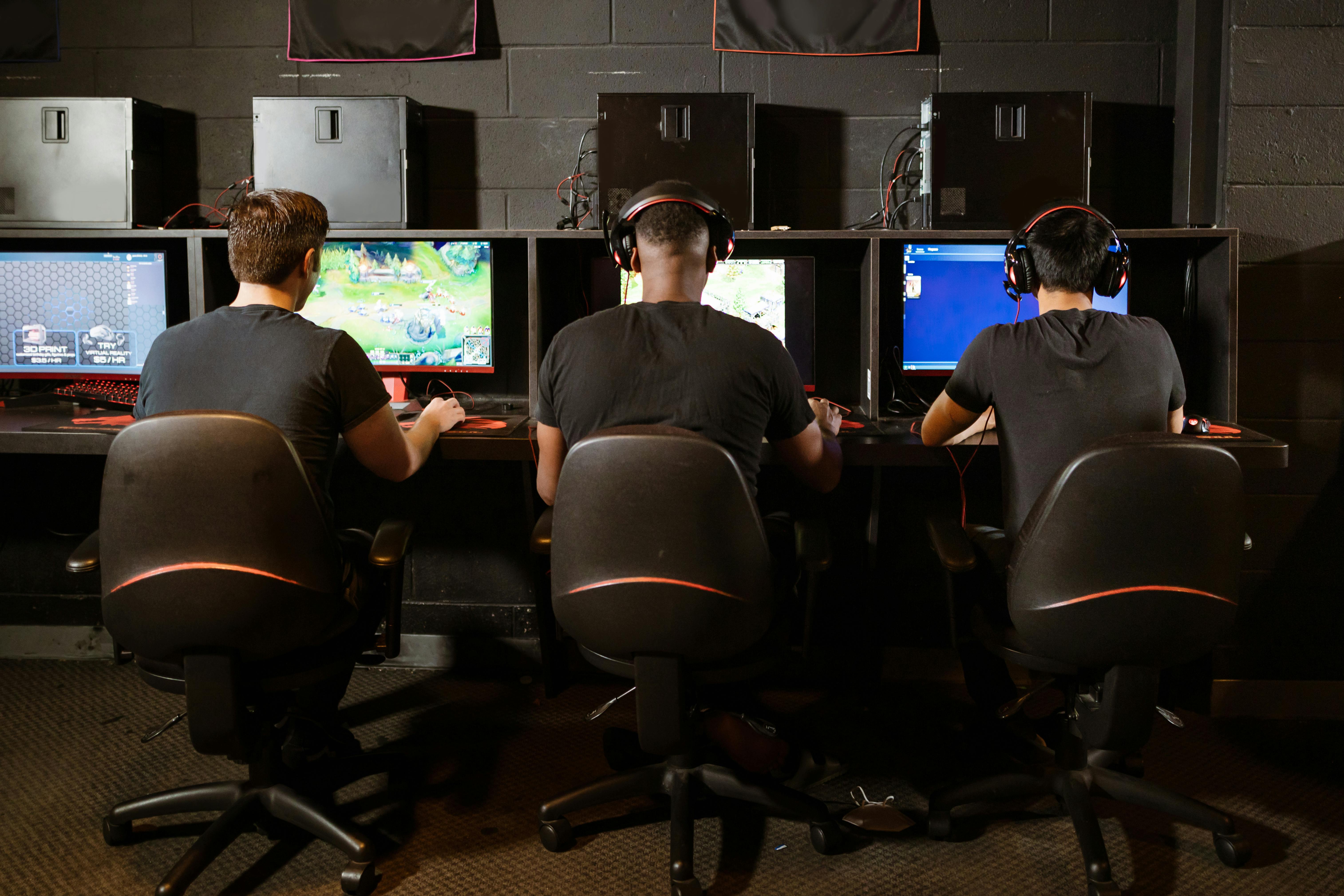
Audio for an interactive medium has to respond to unpredictable player behaviour, which changes how it is made.
Adaptive music
Scores that shift with game state.
Which requires composing in layers rather than linearly.
Sound design
Recording, synthesis and layering to produce game sounds.
Which is largely constructed rather than captured.
Mixing for gameplay
Ensuring important cues are audible.
Which is a functional requirement rather than an aesthetic one.
Audio middleware
Tools letting audio designers implement without programmer time.
Why interactivity changes everything
A film composer knows exactly when each moment arrives; a game composer does not know how long the player will spend in a room or whether they will fight at all.
Which means music has to be written in pieces that can be recombined, layered and transitioned without sounding wrong.
The craft is closer to designing a system that produces music than to writing a score.
Vertical and horizontal techniques
Layering instruments or sequencing segments.
Which are the two standard approaches.
Foley and recording
Original recording for sounds with no natural source.
Which is a substantial part of the work.
Spatial audio
Positional sound giving players information.
Which is functionally important in competitive games.
Voice direction
Actors recording lines without knowing context.
What players notice and do not
Good game audio is largely invisible: it tells you where something is, that an action succeeded, and how much danger you are in, without your consciously registering it.
Which is why it is one of the least discussed and most influential parts of how a game feels.
Playing a well-made game with the sound off makes the contribution obvious immediately.
Feedback sounds
Confirming actions and outcomes.
Which is functional design rather than decoration.
Ambience
Environmental sound establishing place.
Which is built in layers.
Dynamic range
Mixing for varied listening environments.
Which is a real constraint for a medium played on everything from headphones to televisions.
Getting into it
Middleware tools available free for learning.
Where audio budgets actually go
Voice recording and its associated direction, editing and integration, which typically dominates.
Which is why fully voiced games are so much more expensive than text-based ones.
Music and sound design, while creatively substantial, are usually a smaller share of the total than people expect.
Implementation
Getting sound into the game with the right triggers and behaviour.
Which is a technical role alongside the creative one.
Accessibility in audio
Visual alternatives to audio information.
Which is increasingly expected.
Licensed music
Rights that can expire and force removal.
Which has affected several games years after release.
Learning it
Free middleware licences and extensive tutorials available.
A note on how this industry reports itself
Games is an unusually opaque business for one with such a visible product. Budgets are rarely disclosed, sales figures are announced selectively, player numbers are quoted in whichever metric flatters, and profitability is almost never stated at all.
Most of what is publicly known comes from court filings, leaked documents, regulatory submissions and former employees speaking after the fact. That material is reliable when it exists and covers a small fraction of the industry, which means any general claim about how games perform commercially rests on a limited and non-random sample.
Why the production side is worth understanding
A great deal of frustration with games comes from decisions that look inexplicable from outside and are entirely predictable once the structure is visible. Why a game shipped unfinished, why a beloved studio was closed after a successful release, why a sequel dropped features the previous game had, why a service shut down two years in.
None of these are mysteries. They are the outcomes of funding structures, platform economics, portfolio decisions and the fact that games are made by people working to schedules set before anyone knew what the game would be. Knowing that does not make the outcomes better; it does make them legible.
Where the better information is
Developer conference archives are the single best public source on how games are actually made, and a large number of talks are freely available. Regulatory filings during acquisitions have disclosed more real financial detail than a decade of press releases. Trade publications with named industry sources are considerably more informative than consumer coverage on business questions.
One thing worth remembering
Games are made by people, mostly people who care a great deal about them, working inside commercial structures they did not design and frequently cannot change.
Criticism of a game is fair. Criticism of the decisions behind it is usually aimed at the wrong floor of the building, and the people who take it are rarely the people who made them.
Further reading
Developer conference archives, postmortems written by the people who shipped the projects, and trade reporting with named industry sources are the three places where this material is covered properly and in public. All three are freely available, and none require any technical background to follow.