
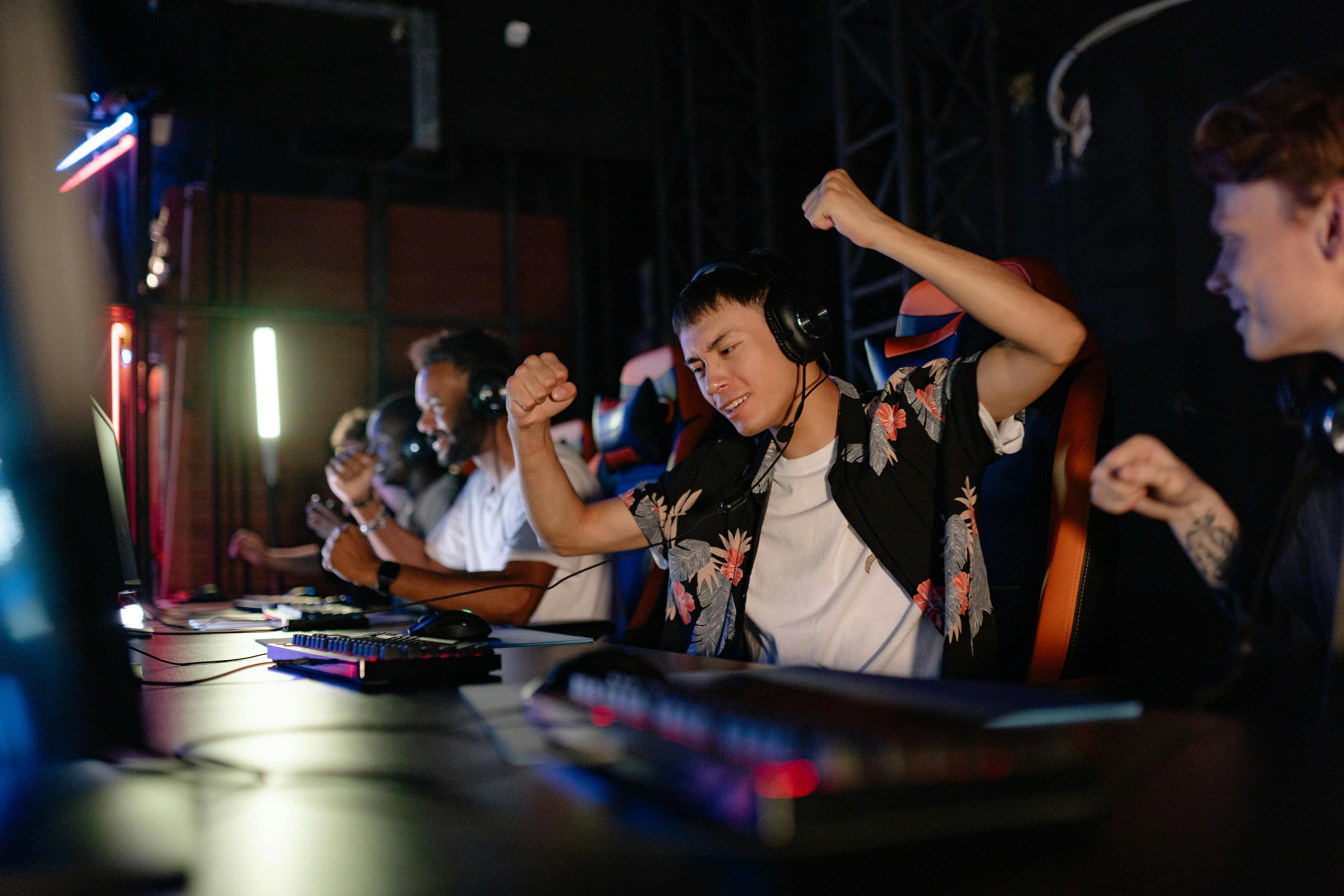
The esports landscape is undergoing a seismic shift in 2026, driven by the revolutionary power of Web3 technologies. Dive into blockchain-powered competitive gaming, NFT ownership, and decentralized autonomous organizations (DAOs) that are empowering players and fans like never before. Discover the top Web3 esports platforms offering unparalleled earning potential, transparent governance, and exciting investment opportunities. Learn how to secure your digital assets, compare services, and book your spot in the future of competitive gaming economy.
Introduction to the Topic
Welcome to 2026, where the roar of the crowd isn't just for the victors on screen, but for the groundbreaking economic shifts happening behind the scenes in competitive gaming. The traditional esports model, while wildly successful, has long faced calls for greater transparency, player ownership, and community empowerment. Enter Web3 esports – a paradigm-shattering evolution leveraging blockchain technology, non-fungible tokens (NFTs), and decentralized autonomous organizations (DAOs) to redefine how we play, watch, invest, and earn in the world of professional gaming. This isn't just about new games; it's about a fundamental restructuring of the entire ecosystem, promising unprecedented opportunities for players, content creators, team owners, and savvy investors.
At gameserrari.com, we've been tracking this monumental shift, and the numbers in 2026 are staggering. Billions are flowing into decentralized gaming ecosystems, driven by a global community eager to participate in truly player-owned economies. This article will serve as your essential guide to navigating this exciting new frontier, highlighting the leading platforms, the underlying technologies, and how you can position yourself to capitalize on the Web3 esports gold rush. Whether you're a seasoned gamer looking to monetize your skills, an investor seeking the next big crypto play, or a fan wanting deeper engagement, the decentralized future of esports is here, and it's ripe with potential.
Backgrounds & Facts
The genesis of Web3 esports lies in addressing the limitations of its Web2 predecessors. In traditional esports, game developers and centralized organizations often hold ultimate control over intellectual property, in-game assets, and prize pools, leading to opaque revenue sharing, limited player agency, and sometimes, a lack of transparency in competition. Web3, built on the principles of decentralization, offers a powerful antidote.
At its core, Web3 esports utilizes blockchain technology to create verifiable ownership of digital assets (like in-game items, character skins, or even team shares) through NFTs. These assets are no longer just lines of code controlled by a game publisher; they are digital property owned by the player, tradable on open marketplaces, and often appreciating in value. This introduces true digital economies where players can earn cryptocurrencies and valuable NFTs through gameplay, a concept famously known as 'Play-to-Earn' (P2E), which has matured significantly by 2026 beyond its early, often criticized, iterations.
DAOs are another cornerstone, enabling communities to collectively govern platforms, make decisions on game development, tournament formats, prize pool distribution, and even treasury management. This shifts power from a centralized entity to the collective wisdom of its participants, fostering a more democratic and transparent environment. Tokenomics, the economic model underpinning these platforms, involves native cryptocurrencies that serve various functions: governance voting, staking for rewards, transaction fees, and in-game currency. By 2026, the global market for Web3 gaming and esports is projected to exceed $50 billion, with a significant portion dedicated to competitive play and digital asset trading. Major blockchain networks like Ethereum, Polygon, Solana, and ImmutableX are the backbone, providing scalability, security, and low transaction costs essential for high-volume esports operations.
Expert Opinion / Analysis
“The transition to Web3 isn't just an upgrade; it's a complete reimagining of the esports value chain,” states Dr. Anya Sharma, Lead Blockchain Gaming Analyst at Quantum Insights. “For years, players were essentially tenants in someone else's digital world. With Web3, they become landowners, shareholders, and active participants in the ecosystem’s growth. This shift empowers individuals, fostering a truly meritocratic environment where skill directly translates into tangible, verifiable earnings and ownership.”
Dr. Sharma further elaborates, “The transparency offered by blockchain is revolutionary for competitive integrity. Smart contracts can automate prize pool distribution, ensuring instant and fair payouts without intermediaries. Fan engagement is also skyrocketing; imagine owning a fractional NFT of your favorite team, gaining voting rights on team decisions, or earning rewards for predicting match outcomes through decentralized betting protocols. This level of intrinsic participation cultivates unparalleled loyalty and investment from the community. However, challenges remain, primarily around user experience – making crypto wallets and blockchain interactions as seamless as traditional gaming – and regulatory clarity, which is slowly catching up to the rapid pace of innovation. Platforms that effectively bridge these gaps will dominate the market.”
💰 Best Options in Comparison (VERY IMPORTANT)
As the Web3 esports sector matures, several platforms are emerging as leaders, each offering unique features for players, fans, and investors. Understanding their distinct approaches is crucial for maximizing your engagement and potential returns.
-
MetaBattle Arena (MBA)
MBA is a flagship competitive P2E platform focusing on a suite of proprietary, skill-based Web3 esports titles. Players own their unique NFT champion skins and equipment, which can be leveled up, traded, or rented out. The platform features robust tokenomics with its native $MBA token for governance, staking, and tournament entry fees. MBA boasts some of the largest decentralized prize pools, funded by a percentage of marketplace transactions and community contributions. Ideal for competitive players seeking direct earnings from their skills and investors looking for high-liquidity digital assets.
-
Echelon Gaming Nexus (EGN)
EGN is building a cross-game, interoperable esports ecosystem. While not developing games itself, EGN integrates with popular Web3 titles and even traditional esports through API bridges, offering decentralized tournament hosting, secure peer-to-peer betting DApps, and fan engagement through unique team/player fan tokens. Its primary focus is on expanding the competitive opportunities across various titles and providing a secure, transparent environment for esports enthusiasts to wager and earn. EGN's $EGN token provides staking rewards, reduced betting fees, and governance rights over platform development. Excellent for diversified investors and fans who want to engage with multiple games.
-
Quantum League DAO
Quantum League DAO represents the truly decentralized, community-driven future. It's a platform where the community governs the entire competitive ecosystem, from deciding which indie Web3 games get featured for professional play to allocating treasury funds for prize pools and player scholarships. Its native $QLD token grants significant voting power, allowing holders to directly influence the league's direction and success. Quantum League DAO also runs a highly successful NFT-based scholarship program, enabling new players to borrow valuable game assets to compete and earn. Best for those who believe in democratic governance, supporting emerging Web3 titles, and fostering new esports talent.
To help you choose the best platform for your goals, here's a detailed comparison:
| Feature | MetaBattle Arena (MBA) | Echelon Gaming Nexus (EGN) | Quantum League DAO |
|---|---|---|---|
| Primary Focus | Competitive P2E, proprietary games, NFT assets | Cross-game tournaments, decentralized betting, fan tokens | Community-governed league, indie Web3 game promotion, talent scouting |
| Earning Model | Tournament winnings, NFT trading/renting, staking $MBA | Betting wins, staking $EGN, fan token rewards, tournament prizes | Tournament winnings, DAO treasury allocation, scholarship earnings, staking $QLD |
| Key Assets | NFT champion skins/equipment, $MBA token | Fan tokens, event NFTs, $EGN token | Governance NFTs, game-specific NFTs (scholarships), $QLD token |
| Governance | DAO via $MBA token holders | DAO via $EGN token holders | Full DAO via $QLD token holders, community voting on all aspects |
| Investment Potential | High growth potential for $MBA and valuable NFTs | Steady growth for $EGN, diverse portfolio via fan tokens | Strong community-driven value appreciation for $QLD, early access to promising indie games |
Outlook & Trends
The trajectory for Web3 esports in 2026 and beyond is nothing short of exponential. We anticipate deeper integration of Artificial Intelligence (AI) not just in game development, but also in personalized coaching DApps that analyze blockchain-recorded gameplay data to offer tailored improvement strategies for players. Virtual Reality (VR) and Augmented Reality (AR) are poised to revolutionize how fans experience esports, offering immersive viewing parties in the metaverse, interactive digital arenas, and even AR overlays during live events that display real-time player stats and NFT ownership details. Imagine a virtual grandstand where you can literally 'walk' around and view players' unique NFT skins up close!
Regulatory frameworks, while still evolving, are expected to provide clearer guidelines for digital asset ownership, decentralized betting, and token issuance, fostering greater institutional investment and mainstream adoption. The rise of 'soulbound tokens' (SBTs) could also play a role, offering non-transferable badges for achievements, verifiable player reputations, and unique competitive histories that build trust and prestige within the decentralized ecosystem. We also foresee the expansion of Web3 esports into more diverse game genres, moving beyond traditional MOBAs and FPS titles to include strategy games, racing simulations, and even educational games, all with integrated P2E mechanics and community governance. The push for true interoperability between different game ecosystems and blockchains will also intensify, allowing assets and player identities to seamlessly transition across various platforms, unlocking unprecedented liquidity and utility.
Conclusion
The era of Web3 esports is not a distant dream; it is the vibrant reality of 2026, fundamentally reshaping competitive gaming. We've moved beyond mere entertainment; we're witnessing the birth of truly player-owned economies where skill, strategy, and community participation translate into tangible value. Platforms like MetaBattle Arena, Echelon Gaming Nexus, and Quantum League DAO are leading the charge, each offering unique avenues for engagement, investment, and earning potential. Whether you're a professional player seeking true ownership of your career, an enthusiastic fan yearning for deeper interaction, or a shrewd investor looking for the next digital frontier, the opportunities within decentralized esports are immense.
Don't be a spectator to this revolution. Explore these innovative platforms, understand their tokenomics, consider investing in the digital assets and tokens that power them, and secure your place in the future of competitive gaming. The financial rewards and the sense of true ownership are unprecedented. The game has changed, and the power is now in your hands. Visit gameserrari.com for more in-depth guides and analysis on navigating the exciting world of Web3 esports.