
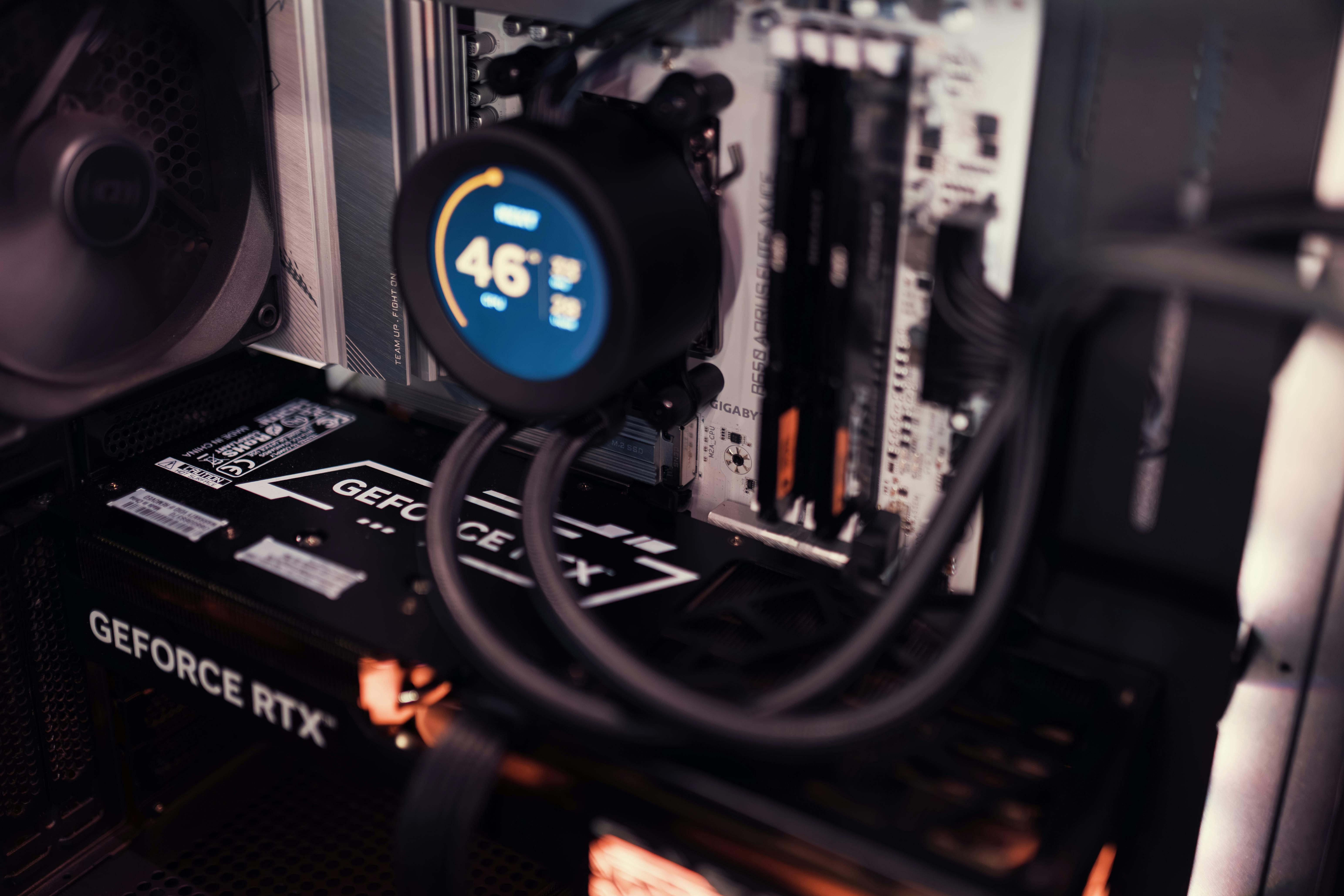
The battle for gaming supremacy in 2026 is fiercer than ever! Discover how NVIDIA's RTX 6000 series, AMD's RDNA 5 architecture, and Intel's groundbreaking Arc Celestial GPUs are pushing the boundaries of 8K gaming, AI upscaling, and ray tracing. We compare the best graphics cards, analyze performance benchmarks, and help you choose the ultimate GPU for your next-gen gaming PC build.
Introduction to the Topic
Welcome, gamers, to the exhilarating year of 2026! The air is thick with anticipation, not just for the next blockbuster titles, but for the silicon marvels that power them. The graphics card landscape has never been more competitive, with three titans – NVIDIA, AMD, and Intel – locked in an epic struggle for your gaming dollar. This isn't just about faster frame rates anymore; it's about a holistic gaming experience, where hyper-realistic ray tracing, AI-powered upscaling, and unprecedented power efficiency define the cutting edge. As games become more visually demanding, pushing resolutions like 8K into the mainstream and demanding higher refresh rates for competitive play, your choice of GPU is more critical than ever.
Today, we dive deep into the heart of this hardware revolution. We'll dissect the architectural innovations, benchmark claims, and real-world implications of the latest offerings from NVIDIA's RTX 6000 series, AMD's RDNA 5, and Intel's Arc Celestial. Whether you're planning a full PC upgrade, looking to replace your aging GPU, or simply curious about the future of gaming graphics, this guide will arm you with the knowledge to make an informed decision and invest in the best gaming GPU for your ultimate setup. Get ready to witness the future of gaming, because in 2026, the power is truly in your hands.
Backgrounds & Facts
The year 2026 marks a pivotal moment in GPU technology, building on years of rapid innovation. Each of the major players has taken distinct paths, converging on common goals of extreme performance and visual fidelity while retaining their unique strengths.
NVIDIA's RTX 6000 Series: The Ray Tracing & AI Juggernaut
NVIDIA continues its dominance in ray tracing and AI with the RTX 6000 series, powered by their formidable 'Ada Lovelace Next' architecture. This generation introduces 5th-generation RT Cores, delivering an astonishing 3x improvement in ray tracing performance over the previous generation, making path tracing in games like 'Cyberpunk 2077: Phantom Liberty' a smooth reality even at 4K resolutions. The 4th-generation Tensor Cores are the backbone of DLSS 6.0, which now leverages advanced neural networks and temporal data to reconstruct images with near-native quality, often exceeding it, while boosting frame rates significantly. VRAM capacities have soared, with flagship models boasting up to 48GB of ultra-fast GDDR7 memory, ensuring future-proofing for even the most demanding 8K textures and complex scenes. Power efficiency has also seen notable gains, with new manufacturing processes allowing for more performance per watt.
AMD's RDNA 5 Architecture: Raw Power Meets Refined Ray Tracing
AMD's RDNA 5 architecture represents a significant leap forward, designed to close the gap in areas where NVIDIA previously held a lead, particularly in ray tracing. With a completely revamped Compute Unit (CU) design, RDNA 5 delivers exceptional rasterization performance, often challenging NVIDIA's top-tier cards in traditional gaming benchmarks. The new dedicated Ray Accelerators are far more potent, offering a substantial boost to ray tracing capabilities, making AMD a truly competitive force in this demanding workload. FSR 4.0, AMD's open-source upscaling technology, has matured into a formidable competitor to DLSS, offering broad compatibility across GPUs and a new suite of image enhancement features that rival proprietary solutions. AMD's cards often offer compelling price-to-performance ratios, especially in the high-end segment, and typically come with ample GDDR7 memory, though often slightly less than NVIDIA's absolute top-tier.
Intel Arc Celestial: The Disruptor's Evolution
Intel's Arc Celestial series, their third generation of discrete GPUs, has come into its own, solidifying Intel's position as a serious contender. Building on the foundations laid by Alchemist and Battlemage, Celestial focuses on optimizing driver performance, enhancing game compatibility, and delivering an incredibly strong value proposition. XeSS 3.0, Intel's AI-powered upscaling, has seen significant improvements, now offering quality and performance on par with its rivals. Intel GPUs continue to excel in media encoding, particularly with their robust AV1 hardware acceleration, making them a favorite among content creators and streamers. While perhaps not always matching the absolute peak performance of NVIDIA or AMD's flagships, Celestial often provides a highly competitive experience at a more accessible price point, making it a powerful choice for gamers seeking excellent performance without breaking the bank. Their integration with Intel CPUs also promises unique platform-level optimizations.
All three manufacturers are leveraging the latest PCIe 6.0 interface, maximizing bandwidth for lightning-fast data transfer with NVMe SSDs, and enhancing technologies like DirectStorage to virtually eliminate loading times.
Expert Opinion / Analysis
The consensus among industry analysts in 2026 is that the GPU market is in its golden age of competition. "We're seeing an unprecedented convergence of raw power, intelligent upscaling, and advanced rendering techniques," states Dr. Evelyn Reed, lead analyst at 'Digital Foundry Pro'. "NVIDIA's strength lies in its ecosystem – DLSS, CUDA, and their established developer relations mean that their ray tracing implementation often feels the most polished. However, AMD's RDNA 5 is a true powerhouse for rasterization and has made incredible strides in RT, offering a compelling alternative, especially for those who prioritize open standards with FSR 4.0."
Intel's Arc Celestial, while still the underdog in terms of market share, is consistently praised for its rapid maturation. "Intel isn't just playing catch-up; they're innovating, particularly on the software and value fronts," comments gaming hardware reviewer, Alex 'TechGuru' Chen. "For many, the Arc Celestial series offers an unbeatable performance-per-dollar ratio, especially when you factor in their media capabilities. Their drivers have finally hit a stride that makes them a viable, often preferable, option for a vast segment of the market."
The integration of AI is no longer a niche feature but a core component of GPU design. "DLSS 6.0 and FSR 4.0 aren't just frame multipliers; they're intelligent rendering solutions that allow developers to push visual fidelity further without sacrificing performance," explains game engine architect, Sarah Jenkins. "This means more detailed worlds, more complex lighting, and ultimately, more immersive experiences for gamers across all tiers of hardware." The trend towards higher VRAM capacities is also a welcome development, future-proofing cards for increasingly detailed assets and higher resolutions. Power consumption, while still a concern for enthusiasts, has seen incremental improvements, with manufacturers optimizing performance-per-watt ratios, though high-end cards still demand robust power supplies.
💰 Best Options in Comparison (VERY IMPORTANT)
Choosing the best gaming GPU in 2026 depends heavily on your budget, resolution target, and specific gaming priorities. Here are our top picks across the spectrum, designed to help you make an informed purchasing decision and get the most bang for your buck.
-
Ultimate Performance: NVIDIA GeForce RTX 6090 Ti
For the uncompromising enthusiast who demands the absolute best, the RTX 6090 Ti remains the undisputed king. With its colossal VRAM (48GB GDDR7), unparalleled 5th-gen RT Cores, and the transformative power of DLSS 6.0, this card delivers silky-smooth 8K gaming at high refresh rates and makes path tracing a default setting. It's an investment, but one that guarantees the most immersive and future-proof gaming experience available. Ideal for competitive 4K gaming at 240Hz+ or cinematic 8K adventures.
-
Premium 4K Powerhouse: AMD Radeon RX 8900 XT
The RX 8900 XT is AMD's answer to high-end dominance, offering incredible raw rasterization performance and significantly improved ray tracing capabilities thanks to RDNA 5. With ample GDDR7 VRAM (24GB-32GB) and the versatile FSR 4.0, this card is a phenomenal choice for 4K gaming at high refresh rates, often rivaling the RTX 6080 Ti at a more attractive price point. It's perfect for gamers who want top-tier performance without necessarily needing NVIDIA's specific ecosystem advantages.
-
High-Value 1440p/Entry 4K: Intel Arc Celestial 970
Intel's Arc Celestial 970 is the breakout star for gamers seeking exceptional value. Delivering performance that often matches or exceeds last generation's high-end cards (e.g., RTX 5070/RX 7800 XT), the Celestial 970 offers a fantastic 1440p experience, even with ray tracing enabled, and can handle entry-level 4K gaming with XeSS 3.0. Its strong media capabilities make it a dual threat for gamers and content creators alike, all at a price that significantly undercuts its direct performance rivals.
-
Mid-Range Sweet Spot: NVIDIA GeForce RTX 6070 Super / AMD Radeon RX 8700
For the vast majority of gamers targeting 1440p high refresh rate or solid 1080p ultra settings, the mid-range offerings are incredibly compelling. The RTX 6070 Super provides excellent ray tracing and DLSS 6.0 at a more accessible price, while the Radeon RX 8700 counters with strong rasterization and FSR 4.0. Both offer sufficient VRAM (12GB-16GB GDDR7) and are fantastic choices for building a powerful yet budget-conscious gaming rig.
To help you compare, here's a detailed breakdown of the flagship and high-end models:
| Feature | NVIDIA RTX 6090 Ti | AMD RX 8900 XT | Intel Arc Celestial 970 |
|---|---|---|---|
| Architecture | Ada Lovelace Next | RDNA 5 | Celestial (Xe HPG Gen3) |
| Process Node | TSMC 3nm (Enhanced) | TSMC 4nm (Enhanced) | TSMC 5nm (Enhanced) |
| VRAM | 48GB GDDR7 | 32GB GDDR7 | 16GB GDDR7 |
| Memory Interface | 384-bit | 384-bit | 256-bit |
| Ray Tracing Gen | 5th Gen RT Cores | Enhanced Ray Accelerators | 3rd Gen Ray Tracing Units |
| AI Upscaling | DLSS 6.0 | FSR 4.0 | XeSS 3.0 |
| Interface | PCIe 6.0 x16 | PCIe 6.0 x16 | PCIe 6.0 x16 |
| TGP (Typical) | ~600W | ~500W | ~350W |
| Target Resolution | 8K Ultra / 4K HFR | 4K HFR / 8K Entry | 1440p HFR / 4K Entry |
| Estimated Price | $2000 - $2500+ | $1200 - $1600 | $600 - $800 |
Outlook & Trends
Looking beyond 2026, the trajectory of gaming hardware is clear: more intelligence, more immersion, and greater accessibility. We anticipate further integration of AI not just for upscaling, but for dynamic content generation, advanced NPC behaviors, and even personalized game experiences. The push towards photorealism will continue, with path tracing becoming the default rendering method for high-end titles. Modular GPU designs, allowing for easier upgrades or specialized functionalities, could emerge as a niche, though full standardization remains a challenge.
Sustainability is also becoming a key factor. Manufacturers are increasingly focused on reducing power consumption, using recycled materials, and designing more repairable components. The rise of cloud gaming services will continue to influence hardware design, with GPUs potentially specializing more for local rendering or for streaming high-fidelity experiences. Furthermore, the convergence of gaming with augmented and virtual reality will demand even more processing power and specialized hardware, blurring the lines between our physical and digital worlds. The future promises not just better graphics, but entirely new ways to interact with games.
Conclusion
The year 2026 is a landmark for gaming hardware, offering an incredible array of choices for every type of gamer. NVIDIA's RTX 6000 series sets the bar for ultimate performance and ray tracing, AMD's RDNA 5 delivers a potent blend of raw power and improved RT, and Intel's Arc Celestial offers compelling value and robust media capabilities. Your decision should align with your budget, your target resolution (1080p, 1440p, or 4K/8K), and your preferred ecosystem. Regardless of your choice, one thing is certain: the future of PC gaming has never looked brighter, faster, or more intelligent. Upgrade your rig today and immerse yourself in the next generation of digital worlds!